
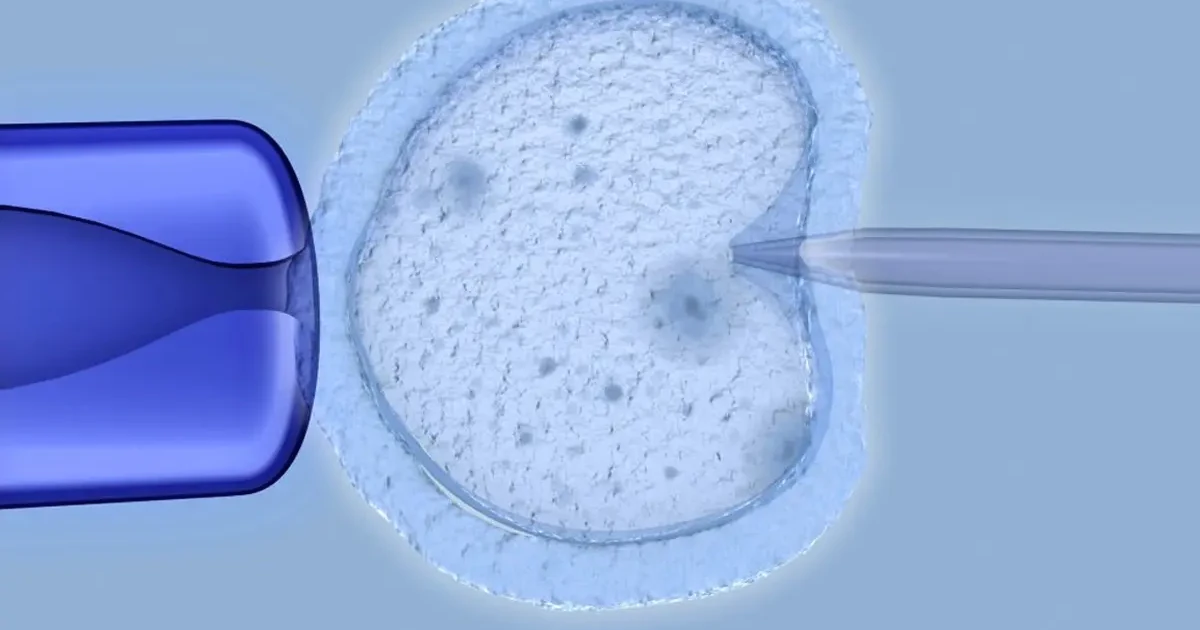
The ROSI technique is one of the special assisted reproductive methods considered in certain cases of male infertility where mature sperm cells cannot be found in IVF treatment. ROSI stands for “Round Spermatid Injection” and refers to the injection of round spermatids.
This method may be considered especially in patients who have no mature sperm cells in the semen and in whom suitable sperm cannot be obtained through sperm retrieval procedures performed on testicular tissue. In the ROSI technique, earlier-stage sperm precursor cells found in testicular tissue are evaluated in the laboratory, and suitable cells are injected into the egg.
ROSI is a more specialized application that differs from standard IVF or microinjection methods. Therefore, it is not suitable for every patient. The treatment decision must be made after a detailed male infertility evaluation, embryological assessment, and consultation with an IVF specialist.
What Is the ROSI Technique?
The ROSI technique is the process of injecting round spermatid cells obtained from testicular tissue into the egg in cases where mature sperm cells cannot be found. These cells are found at earlier stages of sperm development.
In standard IVF or microinjection treatment, mature sperm cells are used. However, in some patients with azoospermia, not only is there no sperm in the semen, but mature sperm cells may also not be obtained during sperm retrieval from the testis. In such cases, the ROSI technique may be considered in selected patient groups.
This method is brought up especially when other sperm retrieval methods are not sufficient.
Who May Be Suitable for the ROSI Technique?
The ROSI technique is not a routine method applied to every male infertility patient. It is mostly evaluated in patients with severe sperm production problems in whom mature sperm cannot be obtained.
The ROSI technique may be considered in the following situations:
- Absence of sperm cells in the semen
- Diagnosis of azoospermia
- Failure to obtain mature sperm cells during micro-TESE
- Presence of round spermatid cells in testicular tissue
- Cases where IVF treatment could not previously be performed because no sperm were found
- Advanced cases of male factor infertility
At this point, the most important issue is proper patient selection. For the ROSI technique to be applied, usable spermatid cells must be present in the testicular tissue.
Azoospermia and the ROSI Technique
Azoospermia is the absence of sperm cells in the semen sample. It is one of the important causes of male infertility. In patients diagnosed with azoospermia, it is first investigated whether the problem is due to obstruction or impaired sperm production.
In some patients, mature sperm cells may be found in testicular tissue through the micro-TESE method. In this case, microinjection treatment can be planned. However, in some patients, mature sperm may not be obtained with micro-TESE.
At this point, the ROSI technique may be considered as an additional option for selected patients. If round spermatid cells are detected in the testicular tissue instead of mature sperm, the use of these cells in the laboratory may be considered.
How Is the ROSI Technique Applied?
The ROSI technique progresses similarly to the IVF treatment process. First, egg development is stimulated in the woman and the egg retrieval procedure is performed. In the male patient, a procedure is performed to obtain cells from the testicular tissue.
The process generally consists of the following stages:
- Ovarian stimulation is performed in the woman.
- When the eggs reach appropriate maturity, the egg retrieval procedure is carried out.
- A surgical sperm retrieval procedure is performed in the man to obtain cells from testicular tissue.
- Round spermatid cells are evaluated in the laboratory.
- Suitable cells are selected and injected into the egg.
- Fertilization and embryo development are monitored.
- If a suitable embryo develops, embryo transfer is planned.
- After transfer, the result is evaluated with a pregnancy test.
ROSI is a delicate procedure that requires advanced embryology experience. Therefore, it is important for the treatment to be planned in centers experienced in this field.
Is the ROSI Technique Different from Standard IVF?
Many stages of treatment in the ROSI technique are similar to standard IVF treatment. Stages such as egg development, egg retrieval, monitoring fertilization in the laboratory, and embryo transfer progress in parallel with the IVF process.
The difference appears during sperm selection and fertilization. In standard microinjection, a mature sperm cell is injected into the egg. In the ROSI technique, a round spermatid cell is used instead of mature sperm.
For this reason, ROSI is a more specialized method than conventional IVF treatment and is evaluated in a more limited patient group.
What Is the Success Rate of the ROSI Technique?
The success rate of the ROSI technique may be lower than standard IVF and microinjection treatments. The main reason for this is that the cells used are not mature sperm cells, but cells at an earlier stage of sperm development.
The success rate varies from patient to patient. Many factors affect the treatment outcome:
- The woman’s age
- Egg quality
- The condition of the cells in the testicular tissue
- The recognizability and quality of round spermatids
- The experience of the embryology laboratory
- Embryo development
- The condition of the endometrial lining
- Previous treatment history
Therefore, it would not be accurate to provide a single success rate for the ROSI technique. A patient-specific evaluation should be made, and expectations should be established realistically.
Is the ROSI Technique Safe?
Scientific studies on the ROSI technique are ongoing. Although the method may be a promising option for some patients, it is not as common or routine as standard IVF applications.
Therefore, before treatment, couples should be informed in detail about the advantages, limitations, chance of success, and uncertainties of the method. The decision for the ROSI technique should not be made only based on the information that “no sperm were found,” but according to all clinical and laboratory findings.
In addition, the follow-up process for pregnancies achieved after ROSI should be carefully planned by an expert team.
Does the ROSI Technique Harm Sperm?
The cells used in the ROSI technique are not mature sperm cells, but round spermatid cells at an earlier stage of sperm development. Recognizing, selecting, and injecting these cells into the egg during the laboratory process requires special experience.
In some applications, additional laboratory techniques may be used to activate the egg. These procedures are performed by the embryology team under controlled conditions. However, the effectiveness and safety of the method should be evaluated individually for each patient.
Therefore, instead of making definitive statements such as “it is safe for every patient” or “it definitely causes no harm,” it should be emphasized that the process must be carried out in experienced centers and under controlled conditions.
Can the ROSI Technique Be Tried Again?
The ROSI technique can be tried more than once in suitable patients. However, the decision to try again should be made according to the results of the previous attempt.
If egg quality is low, embryo development has not occurred, or no suitable cells are found in the testicular tissue, the next treatment plan should be re-evaluated. In some couples, different laboratory methods, genetic evaluations, or alternative reproductive options may be considered.
The decision to try again must be made by evaluating the couple’s medical condition, psychological readiness, costs, and chance of success together.
Why Is Choosing the Right Center Important in the ROSI Technique?
The ROSI technique is a method that requires advanced laboratory experience. Correct recognition and selection of round spermatid cells, injection into the egg, and monitoring embryo development all require expertise.
For this reason, the following points are important when planning ROSI treatment:
- Experience in male infertility evaluation
- Expertise in micro-TESE and similar surgical procedures
- Technical infrastructure of the embryology laboratory
- Experience in recognizing and applying round spermatids
- Providing the couple with accurate and realistic information
- Planning pregnancy follow-up after treatment
Before starting the treatment process, couples should discuss all their questions openly with their physicians. This helps the process progress in a healthier way.
What Should Be Known About the ROSI Technique?
The ROSI technique is a special assisted reproductive method that may be considered in certain patients diagnosed with azoospermia when mature sperm cannot be obtained. Unlike standard IVF treatment, it is based on the use of round spermatid cells at an early stage of sperm development.
This method is not suitable for every patient, and its success rate may be more limited compared with conventional IVF treatments. However, in selected patient groups, it may be considered as an additional option in situations where there was previously thought to be no chance of pregnancy.
The decision for the ROSI technique should be made by considering male infertility evaluation, the woman’s egg capacity, laboratory facilities, the couple’s expectations, and the limitations of the treatment together.
Frequently Asked Questions
What is the ROSI technique?
The ROSI technique is a special IVF method applied in some cases of azoospermia where mature sperm cannot be found, by injecting round spermatid cells into the egg.
Who is the ROSI technique applied to?
It may be considered in selected patients who have no sperm in the semen, in whom mature sperm cannot be obtained with micro-TESE, but who have round spermatid cells in the testicular tissue.
Is the ROSI technique different from standard IVF?
Yes. The IVF process generally progresses similarly; however, during fertilization, a round spermatid cell is used instead of mature sperm.
Does the ROSI technique guarantee pregnancy?
No. The ROSI technique does not guarantee pregnancy. Success depends on many factors such as egg quality, cell quality, embryo development, and laboratory experience.
Is the ROSI technique safe?
The ROSI technique is a method evaluated in a special and limited patient group. Safety and success may vary from patient to patient. Therefore, the process must be managed by experienced specialists.