
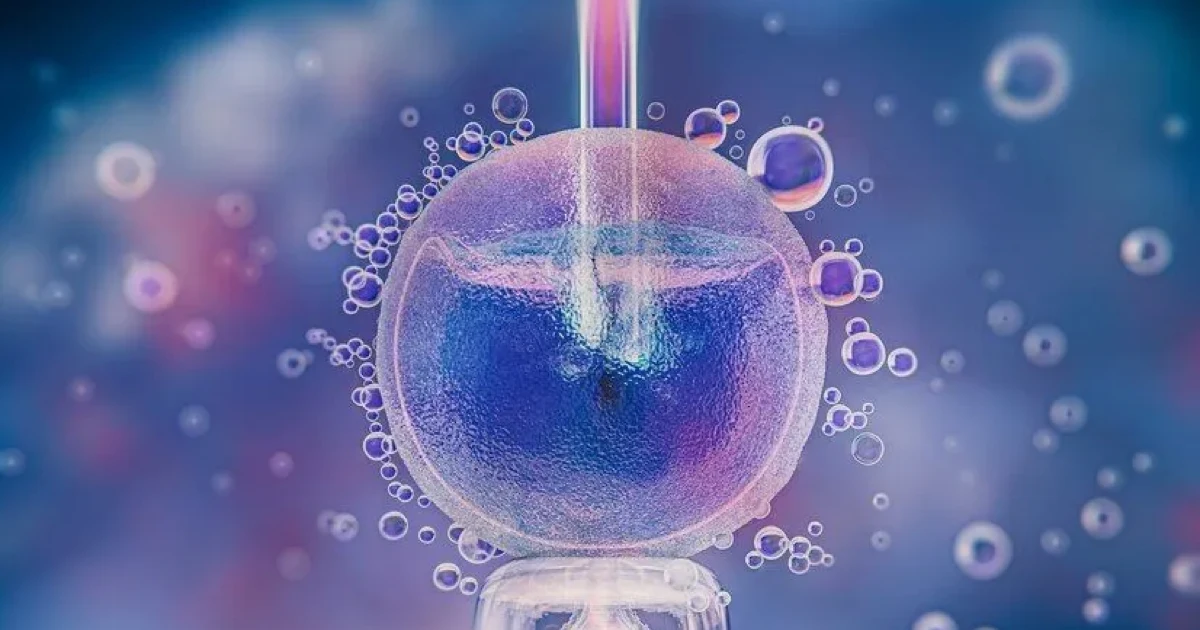
IVF, or in vitro fertilization, is an assisted reproductive technique in which an egg cell and a sperm cell are brought together in a laboratory environment. It is commonly known as IVF treatment.
In this method, eggs collected from the woman and sperm cells obtained from the man are evaluated in the embryology laboratory. Suitable eggs are fertilized with sperm cells using the microinjection method under a special microscope. After fertilization, the resulting embryos are monitored in the laboratory for 3 to 5 days. An embryo with appropriate development is then transferred into the uterus.
IVF treatment is one of the most commonly used assisted reproductive methods for couples who cannot achieve pregnancy naturally. However, it may not be the first option for every couple. The treatment decision should be made according to the woman’s age, ovarian reserve, the condition of the fallopian tubes, sperm quality, uterine structure, and previous pregnancy history.
What Is IVF Treatment?
IVF treatment is the process of fertilizing egg and sperm cells outside the body in a laboratory environment and placing the resulting embryo into the uterus. For this reason, its medical name is “in vitro fertilization.”
In a natural pregnancy, sperm and egg meet in the fallopian tubes. Fertilization occurs there, and the resulting embryo moves toward the uterus and implants in the uterine wall. However, this process may not occur naturally in cases such as blocked tubes, low sperm count, reduced ovarian reserve, or unexplained infertility.
IVF treatment aims to overcome some of these problems in a laboratory environment.
What Are Assisted Reproductive Techniques?
Assisted reproductive techniques refer to treatment methods in which medical support is provided for eggs, sperm, or embryos when pregnancy cannot be achieved naturally. They are also abbreviated as ART.
These methods may include ovulation monitoring, ovulation induction, intrauterine insemination, IVF treatment, microinjection, embryo freezing, genetic diagnosis, and sperm selection.
IVF treatment is one of the most advanced and most frequently used methods among assisted reproductive techniques. However, it is not necessary to proceed directly to IVF treatment in every case of infertility. First, the couple’s condition should be evaluated in detail.
Is IVF Treatment the First Option?
IVF treatment may be the first option in some situations. However, it is not considered the first-line treatment for every couple. For example, in a patient with a mild ovulation problem, ovulation treatment or intrauterine insemination may be evaluated first. On the other hand, in cases where the tubes are completely blocked or the sperm count is severely low, IVF treatment may be recommended directly.
Therefore, the answer to the question “Is IVF the first option?” is individual. The treatment plan should be determined according to the cause of infertility.
In Which Situations Can IVF Treatment Be the First Option?
In some medical conditions, proceeding to IVF treatment without losing time may be a more appropriate approach. This decision is made according to the couple’s examination and test results.
IVF treatment may be considered as the first option in the following situations:
- Fallopian tubes found to be blocked on HSG
- Previous surgical tubal ligation
- Severe decrease in sperm count
- Absence of sperm in semen
- Significant problem in sperm motility
- Risk of early menopause or reduced ovarian reserve
- Ovulation problems making pregnancy difficult
- Presence of fibroids that may prevent the embryo from implanting in the uterine wall
- Risk of familial genetic disease
- Diagnosis of unexplained infertility
- Failure to achieve pregnancy despite previous treatments
For example, if HSG shows that both tubes are closed in a woman, it may not be possible for the sperm and egg to meet naturally. In this case, IVF treatment may become a direct option.
What Is the Chance of Success in IVF Treatment?
The chance of success in IVF treatment is not the same for every couple. The success rate varies depending on the woman’s age, egg quality, sperm quality, embryo development, the condition of the endometrial lining, and previous treatment history.
The main factors affecting success include:
- The woman’s age
- Ovarian reserve
- Number of eggs collected
- Egg quality
- Sperm count, motility, and morphology
- Embryo quality
- Thickness and structure of the endometrial lining
- General condition of the tubes and uterus
- Genetic factors
- Previous miscarriage or failed IVF history
Especially the woman’s age is one of the most important factors in IVF treatment. As age advances, the number and quality of eggs may decrease. This may affect embryo quality and the chance of pregnancy.
Can a Guarantee Be Given in IVF Treatment?
Pregnancy cannot be guaranteed in IVF treatment. The treatment is an effective method that increases the chance of pregnancy; however, not every treatment results in pregnancy.
This is because pregnancy does not depend only on the fertilization of the egg and sperm. The genetic structure of the embryo, its capacity to implant in the uterus, the intrauterine environment, hormonal balance, and the body’s overall response also affect the outcome.
Therefore, the right approach is to establish a realistic expectation of success according to the couple’s condition. After the first examination and tests, your doctor can provide clearer information about your individual chance of success.
What Is Fresh Embryo Transfer?
Fresh embryo transfer is the placement of an embryo that develops after egg retrieval and fertilization into the uterus within the same treatment cycle. The term “Fresh Embryo Transfer” is used in English.
Embryos are usually monitored in the laboratory for 3 to 5 days. If the embryo develops appropriately and the uterus is ready, it can be transferred in the same cycle.
The decision for fresh transfer is made according to hormone levels, the condition of the endometrial lining, embryo quality, and the patient’s general health status.
What Is Frozen Embryo Transfer?
In some cases, transferring the embryo in the same cycle may not be appropriate. Embryos may be frozen due to reasons such as hormone levels, the condition of the endometrial lining, excessive ovarian response, or waiting for genetic test results.
Embryos are frozen using the vitrification method and stored for transfer in the following months. This procedure is called frozen embryo transfer. In English, it is referred to as “Frozen Embryo Transfer” or “Thaw ET cycle.”
In frozen embryo transfer, the uterus is specially prepared for transfer. At the appropriate time, the embryo is thawed and placed into the uterus.
Basic Steps in the IVF Treatment Process
IVF treatment is a planned process consisting of multiple stages. Each couple’s treatment protocol may differ; however, the process generally progresses in 5 basic steps.
Step 1: Initial Evaluation and Examination
Before starting IVF treatment, the couple must be evaluated in detail. During the first consultation, previous tests, pregnancy history, miscarriage history, surgeries, medications used, and current health status are reviewed.
In the woman, the uterus and ovaries are evaluated by ultrasound. If necessary, hormone tests, semen analysis, HSG, genetic tests, or additional examinations may be requested.
During the initial evaluation, the treatment plan, chance of success, required tests, and how the process will proceed are discussed. Depending on the couple’s condition, this consultation may last approximately 1 to 1.5 hours.
Step 2: Ovarian Stimulation and Egg Monitoring
After the initial evaluation and tests are completed, the ovarian stimulation stage begins. In this process, the aim is to stimulate the development of multiple eggs in the ovaries using hormone injections used in IVF treatment.
Egg growth is monitored at certain intervals with vaginal ultrasonography. When necessary, blood hormone levels are also checked. The aim is to ensure that the eggs reach the appropriate maturity at the right time.
When the eggs reach sufficient size, a trigger injection is administered and the egg retrieval procedure is planned.
Step 3: Egg Retrieval and Sperm Sample Collection
Egg retrieval, medically known as OPU or oocyte pickup, is a same-day procedure performed under anesthesia. During the procedure, mature eggs are collected from the ovaries with the help of a thin needle and delivered to the embryology laboratory.
On the same day, a sperm sample is obtained from the male partner. If there is a serious problem in the sperm sample or if no sperm are found in the semen, surgical sperm retrieval methods may be evaluated when necessary.
The egg retrieval procedure is usually completed painlessly. After the procedure, the patient is kept under observation for a short time and can return home the same day.
Step 4: Fertilization and Embryo Development in the Laboratory
Egg and sperm cells are evaluated in the embryology laboratory. Suitable eggs are fertilized with sperm cells using the microinjection method. This procedure is performed under a special microscope.
After fertilization, embryos are monitored in the laboratory environment. This period is an exciting waiting process for couples. Embryos are usually observed for 3 to 5 days.
During this process, embryologists evaluate embryo development, division pattern, and quality characteristics. Selecting a suitable embryo is important for the transfer stage.
Step 5: Embryo Transfer
Embryo transfer is the final stage of IVF treatment. Among the embryos monitored in the laboratory, those with good quality are selected and placed into the uterus with the help of a thin catheter.
Embryo transfer is usually a short procedure that does not require anesthesia. During the procedure, the embryo is carefully and gently released into the uterus.
After the transfer, return to daily life is planned according to the doctor’s recommendations. A pregnancy test is performed approximately 10 days after the transfer. A blood beta-hCG test is used to evaluate whether the embryo has implanted in the uterus.
Why Is Personalized Planning Important in IVF Treatment?
Although IVF treatment has a standard roadmap, every couple’s treatment does not progress in the same way. Some patients may have low ovarian reserve. In others, sperm factor may be more prominent. In some couples, embryo quality, the endometrial lining, or genetic factors may be more important.
Therefore, the treatment process should be planned individually. The medication dose to be used, timing of egg retrieval, embryo transfer day, decision for fresh or frozen transfer, and additional laboratory methods are determined according to the patient’s condition.
Proper planning reduces unnecessary procedures and allows the treatment to proceed in a more controlled way.
What Should Be Known About IVF Treatment?
IVF treatment is an important method in infertility treatment. However, this process is not limited only to fertilization in the laboratory. Pre-treatment evaluation, ovarian stimulation, egg retrieval, sperm preparation, embryo development, and transfer should all be planned carefully.
The chance of success varies from person to person. Therefore, it is important for couples to begin the process with realistic expectations, not to miss the follow-ups recommended by the doctor, and to be properly informed at every stage.
IVF treatment is not a guarantee, but a medical method that increases the chance of pregnancy with correct patient selection and proper planning.
Frequently Asked Questions
What is IVF treatment?
IVF treatment is the process of fertilizing egg and sperm cells in a laboratory environment and transferring the resulting embryo into the uterus.
Is IVF treatment the first option?
It is not the first option for every couple. However, it may be the first option in cases such as blocked tubes, severe sperm problems, reduced ovarian reserve, or risk of genetic disease.
Is there a guarantee of success in IVF treatment?
No. IVF treatment may increase the chance of pregnancy, but it does not provide a guarantee. Success depends on age, egg quality, sperm status, embryo quality, and uterine structure.
What is fresh embryo transfer?
Fresh embryo transfer is the placement of the embryo formed after egg retrieval and fertilization into the uterus within the same treatment cycle.
What is frozen embryo transfer?
Frozen embryo transfer is the thawing and transfer into the uterus of an embryo that was previously frozen using the vitrification method.