
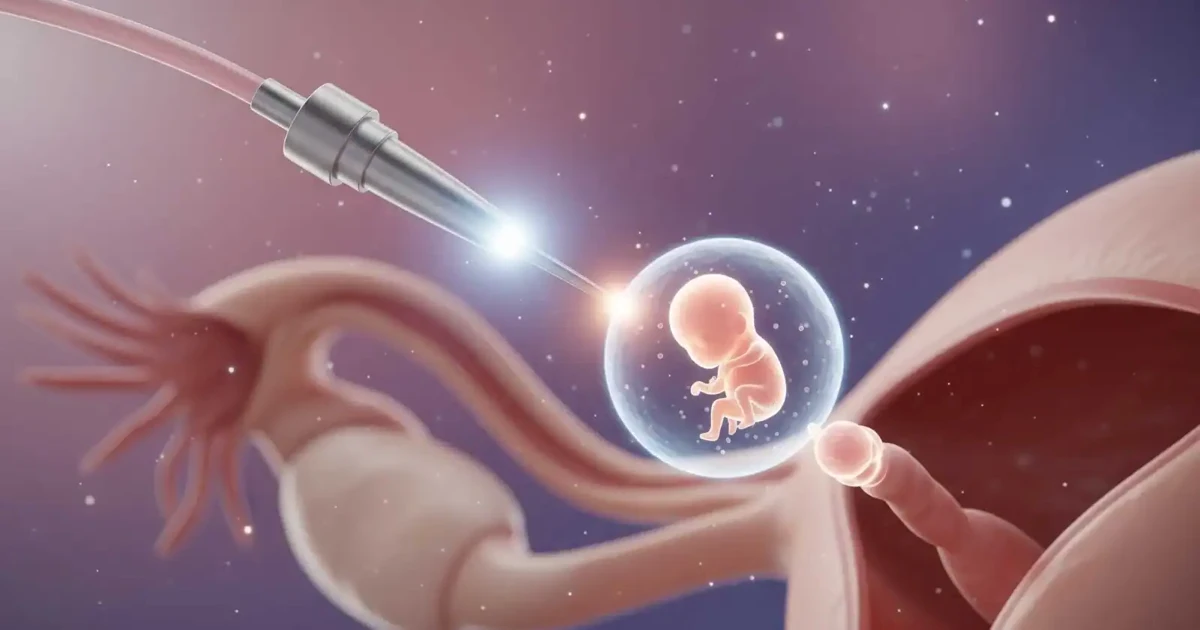
IVF, or in vitro fertilization, is one of the most effective assisted reproductive methods used for couples who have difficulty achieving pregnancy naturally. In this method, eggs are collected from the ovaries, fertilized with sperm in a laboratory environment, and the resulting embryo is placed into the uterus.
In a natural pregnancy, sperm must pass through the uterus, reach the fallopian tubes, fertilize the egg there, and the resulting embryo must implant in the uterus. However, this process may not always proceed smoothly. Low sperm count, blocked or damaged fallopian tubes, uterine problems, insufficient egg production, or poor egg quality may make pregnancy more difficult.
In such cases, IVF may help increase the chance of pregnancy by bringing the egg and sperm together in a laboratory environment.
Who Is IVF Treatment Suitable For?
IVF treatment may be applied in couples with different causes of infertility. Before deciding on treatment, both the woman and the man are evaluated separately. Ovarian reserve, sperm analysis, uterine structure, the condition of the tubes, and previous pregnancy or treatment history are assessed together.
IVF treatment may be preferred in the following situations:
- Blocked or damaged fallopian tubes
- Low sperm count or motility
- Ovulation problems
- Reduced ovarian reserve
- Unexplained infertility
- Advanced maternal age
- History of previous unsuccessful pregnancy or treatment
- Conditions requiring genetic evaluation
- Cases requiring donor eggs or donor sperm
The aim of IVF treatment is to increase the chance of pregnancy by obtaining the highest-quality eggs, sperm, and embryos through personalized planning.
How Is IVF Treatment Performed?
Each woman’s treatment cycle is unique. The medications to be used, doses, frequency of monitoring, and timing of embryo transfer are determined according to individual data. However, IVF treatment generally consists of several basic stages.
Step One: Ovulation Induction
In a normal menstrual cycle, the ovaries usually develop a single egg. In IVF treatment, the goal is to help multiple eggs mature within the same cycle. For this purpose, fertility medications called gonadotropins are used.
These medications are usually administered as injections and stimulate the ovaries to develop multiple eggs. Obtaining more eggs may increase the possibility of creating more embryos in the laboratory. This may contribute positively to the chance of pregnancy in some patients.
During treatment, the response of the ovaries to the medications is monitored with ultrasound and hormone tests. This monitoring is important for determining the correct timing of egg retrieval.
Step Two: Egg Retrieval Procedure
When the eggs reach sufficient maturity, the egg retrieval procedure is performed. Medically, this procedure is also called oocyte retrieval.
Egg retrieval is usually performed under mild sedation. The doctor guides a thin needle through the vaginal wall to the ovaries with the help of ultrasound imaging and collects the eggs from the developed follicles.
During the procedure, the patient is under sedation so that she does not feel pain. An anesthesiologist monitors the patient throughout the procedure. The collected eggs are then sent to the embryology laboratory.
The number of eggs obtained after egg retrieval may vary depending on age, ovarian reserve, response to the medications used, and individual factors.
Step Three: Fertilization in the Laboratory
When the eggs reach the embryology laboratory, they are first evaluated for maturity. Mature eggs are monitored in incubators with special conditions similar to the environment inside the body.
Fertilization may be performed using two different methods:
Conventional IVF Method
In the conventional IVF method, sperm and eggs are placed in the same culture dish in the laboratory environment. The sperm fertilizes the egg on its own. This method may be preferred when sperm parameters are suitable.
ICSI Method
If sperm count is low, sperm motility is reduced, or a fertilization problem has occurred previously, the ICSI method may be applied. ICSI is also known as microinjection. In this method, a single selected sperm is injected directly into a mature egg.
After the egg and sperm are combined, whether fertilization has occurred is evaluated within approximately 18 hours. Embryo development is then monitored over the following days to assess whether it is progressing healthily.
Embryos are usually monitored in the laboratory for a total of 5 days. During this period, the developmental quality of the embryos is evaluated.
What Is Preimplantation Genetic Screening?
In some IVF processes, preimplantation genetic screening may be performed to evaluate the chromosomal structure of embryos. This procedure helps examine embryos genetically before embryo transfer.
Genetic screening may be considered especially in cases of advanced maternal age, recurrent IVF failure, recurrent miscarriage history, or known genetic risks.
The purpose of this method is to make a more informed selection of the embryo to be transferred into the uterus.
Step Four: Embryo Transfer
Embryo transfer is one of the most important stages of IVF treatment. At this stage, the doctor evaluates the number and quality of the embryos obtained. Which embryo will be transferred and when it will be transferred are planned according to embryo development, the patient’s age, treatment history, and clinical condition.
Embryo transfer is usually a short procedure that does not require anesthesia. With the help of a thin catheter, the embryo or embryos are placed into the uterus. During the procedure, ultrasound guidance may be used to ensure the most suitable placement inside the uterus.
Today, single embryo transfer is preferred in many patients in order to reduce the risk of multiple pregnancy. The number of embryos to be transferred should always be determined through an individualized evaluation.
What Happens After Embryo Transfer?
After embryo transfer, a certain period of time must pass to determine whether pregnancy has occurred. When a blastocyst-stage embryo is transferred, it may take approximately 9 days for pregnancy to become detectable in the blood.
The process after transfer generally progresses as follows:
- Day 1: The blastocyst begins to hatch from its shell.
- Day 2: The blastocyst continues to hatch and begins to attach to the uterus.
- Day 3: The blastocyst attaches more deeply to the uterine lining and begins implantation.
- Day 4: Implantation continues.
- Day 5: Implantation is completed, and the cells that will form the placenta and fetus begin to develop.
- Day 6: The pregnancy hormone hCG begins to enter the bloodstream.
- Days 7 and 8: Embryo development continues and hCG secretion increases.
- Day 9: The hCG level in the blood may reach a level measurable by a pregnancy test.
After embryo transfer, it may be recommended to avoid heavy physical activities for a few days. However, complete immobility is generally not necessary during this period. The most accurate recommendations should be given by the doctor according to the patient’s treatment plan.
What Is Embryo Freezing?
During IVF treatment, some patients may obtain more high-quality embryos than the number planned for transfer. If these embryos are of suitable quality, they may be frozen and stored for future use.
Embryo freezing is also called cryopreservation. This method may provide an important advantage for couples who wish to have children again in the future. This is because in subsequent treatment cycles, ovarian stimulation and egg retrieval may not always be necessary again.
Embryos may be frozen in the following situations:
- If there are high-quality embryos that are not transferred in the same cycle
- If the result of preimplantation genetic screening will be awaited
- If transfer needs to be postponed for medical reasons
- If pregnancy is planned again in the future
- If the couple wants to postpone having children to a more suitable time
Frozen embryo transfers may be a physically and financially easier next treatment option for some patients.
What Is Complex IVF?
Some IVF processes may require more specialized evaluation compared with standard IVF treatments. Previous failed treatment attempts, severely low sperm count or motility, poor embryo quality, or the need for surgical sperm retrieval may make treatment more complex.
Complex IVF situations may include:
- Recurrent IVF failure
- Severe male infertility
- Very low sperm count
- Severely reduced sperm motility
- Need for surgical sperm retrieval
- Poor embryo quality
- Advanced maternal age
- Hormonal disorders such as polycystic ovary syndrome
In such cases, the treatment plan should be prepared in more detail, and the couple’s previous treatment history should be carefully evaluated.
Factors Affecting IVF Success Rate
The success rate of IVF treatment varies from person to person. Not every treatment cycle produces the same results. Many factors affect success.
The main factors that may affect IVF success include:
- The woman’s age
- Ovarian reserve
- Egg quality
- Sperm count and motility
- Embryo quality
- The condition of the uterine lining
- Previous pregnancy or miscarriage history
- Previous IVF attempts
- Genetic factors
- Laboratory conditions
- Response to treatment
Maternal age, in particular, is a determining factor for egg quality. Therefore, when planning IVF treatment, age and ovarian reserve should be evaluated together.
Why Is Personalized Planning Important in IVF Treatment?
Although IVF treatment may appear to be a standard procedure, the same protocol is not applied to every patient. While some patients may have good ovarian reserve, sperm factor may be the main issue in others. In some couples, embryo quality or the implantation process may require more detailed evaluation.
Therefore, a detailed assessment before starting treatment is important. Hormone tests, ultrasound examination, sperm analysis, uterine evaluation, and previous treatment records should be reviewed together.
Proper planning may help reduce unnecessary procedures and increase the chance of pregnancy.
What Should Be Known About IVF Treatment?
IVF treatment is an effective method that increases the chance of achieving pregnancy; however, it does not provide a definite pregnancy guarantee. The success of treatment depends on many factors such as age, egg and sperm quality, embryo development, uterine preparation, and general health status.
The treatment process can be emotionally intense as well as physically demanding. Therefore, it is important for couples to be properly informed about the process, to set realistic expectations, and to have the treatment plan prepared individually.
Frequently Asked Questions
What is IVF?
IVF is an in vitro fertilization treatment in which eggs are fertilized with sperm in a laboratory environment and the resulting embryo is placed into the uterus.
Who is IVF applied to?
It may be applied in couples with blocked tubes, sperm-related problems, ovulation problems, reduced ovarian reserve, or a diagnosis of unexplained infertility.
Is the egg retrieval procedure painful?
Egg retrieval is usually performed under sedation. Therefore, pain is not felt during the procedure. Mild cramping or tenderness may occur after the procedure.
How is embryo transfer performed?
In embryo transfer, the embryo is placed into the uterus with the help of a thin catheter. The procedure is short and usually does not require anesthesia.
Does IVF treatment guarantee pregnancy?
No. IVF is an effective method that increases the chance of pregnancy; however, it does not guarantee pregnancy. The success rate varies according to age, egg and sperm quality, embryo development, and uterine structure.